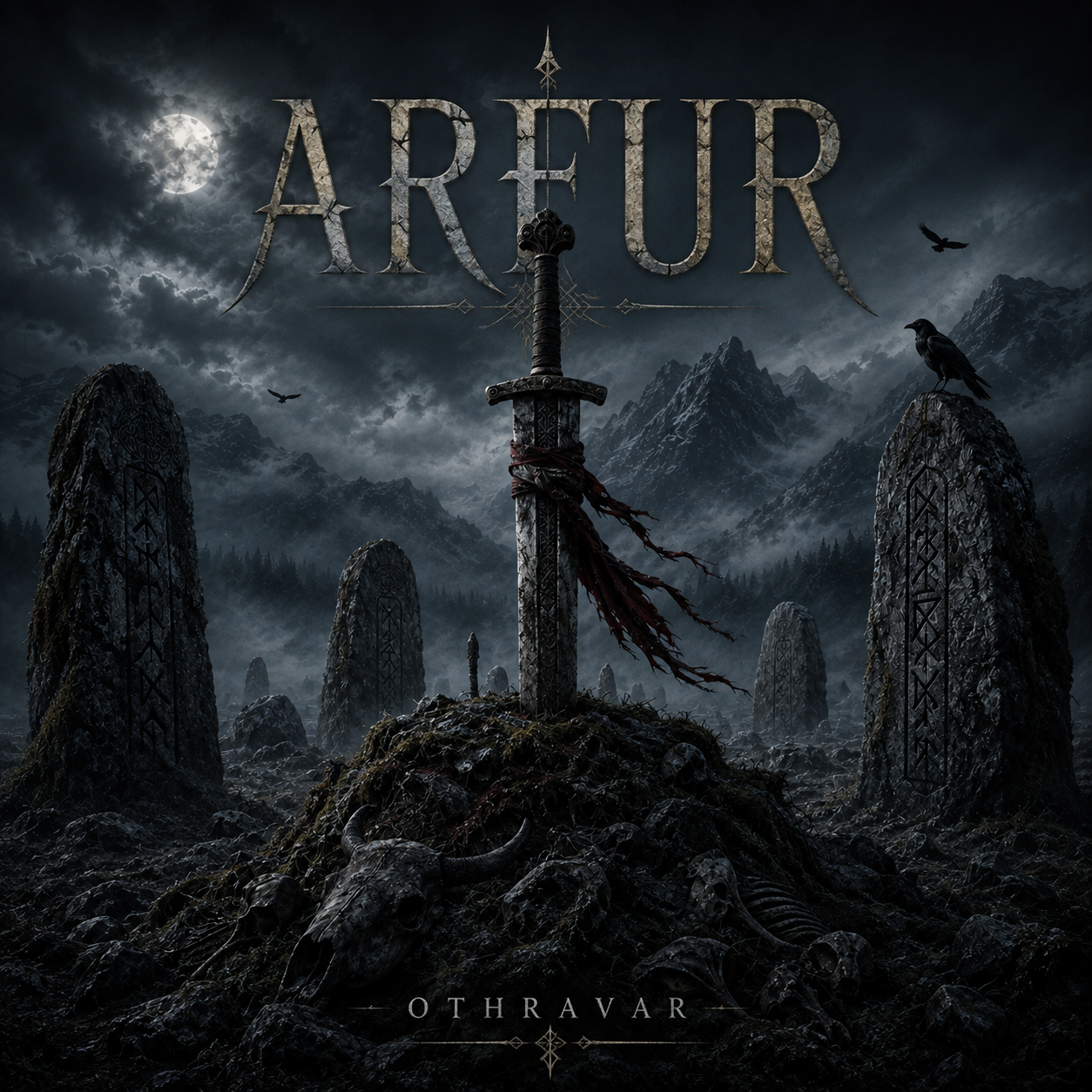
Listen
Lyrics
Völva sagði mér dauða minn, Ormur úr hausi Faxa hests míns, Ég hló, ég reiddist, ég drap hestinn, Ég gróf hann djúpt, ég flúði örlögin. Þrjú hundruð ár flý ég spádóminn, Þrjú hundruð ár berst ég og lifi, Oddur flýr, Oddur sigrar, En örlögin ganga hægar en ég, ekki hraðar. Þrjú hundruð ár flý ég spádóminn, Þrjú hundruð ár berst ég og lifi, Oddur flýr, Oddur sigrar, En örlögin ganga hægar en ég, ekki hraðar. Ég barðist í hverju landi þekktu, Konungar dóu, heimsveldi féllu, Ég einn stóð eftir, ódauðlegur að sjá, Þrjú hundruð ár, ég taldi ekki lengur. Gamall maður snýr heim að lokum, Fætur hans þekkja gömlu slóðina, Hann finnur haug þar sem hesturinn svaf, Spádómurinn beið þolinmóður allan tímann. Þrjú hundruð ár flý ég spádóminn, Þrjú hundruð ár berst ég og lifi, Oddur flýr, Oddur sigrar, En örlögin ganga hægar en ég, ekki hraðar. Þrjú hundruð ár flý ég spádóminn, Þrjú hundruð ár berst ég og lifi, Oddur flýr, Oddur sigrar, En örlögin ganga hægar en ég, ekki hraðar. Ég sparkaði í hauskúpuna gömlu, Ah-ah-ah-aaaah... Ormurinn beið þar. Þrjú hundruð ár. Fyrir mig einan. Ég sparkaði í hauskúpuna gömlu, Ah-ah-ah-aaaah... Ormurinn beið þar. Þrjú hundruð ár. Fyrir mig einan. Þrjú hundruð ár flý ég spádóminn, Þrjú hundruð ár berst ég og lifi, Oddur flýr, Oddur sigrar, En örlögin ganga hægar en ég, ekki hraðar. Þrjú hundruð ár flý ég spádóminn, Þrjú hundruð ár berst ég og lifi, Oddur flýr, Oddur sigrar, En örlögin ganga hægar en ég, ekki hraðar. Ormurinn beit, spádómurinn stóð, Þrjú hundruð ár breyttu engu. Ormurinn beit, spádómurinn stóð, Þrjú hundruð ár breyttu engu.
A völva foretold my death, A serpent from the skull of Faxi, my horse, I laughed, I grew angry, I killed the horse, I buried him deep, I fled my fate. Three hundred years I flee the prophecy, Three hundred years I fight and live, Oddr flees, Oddr conquers, But fate walks slower than I, not faster. Three hundred years I flee the prophecy, Three hundred years I fight and live, Oddr flees, Oddr conquers, But fate walks slower than I, not faster. I fought in every known country, Kings died, empires fell, I alone remained, immortal to look at, Three hundred years, I no longer counted. An old man comes home at the last, His feet know the old path, He finds the mound where the horse slept, The prophecy waited patiently all that time. Three hundred years I flee the prophecy, Three hundred years I fight and live, Oddr flees, Oddr conquers, But fate walks slower than I, not faster. Three hundred years I flee the prophecy, Three hundred years I fight and live, Oddr flees, Oddr conquers, But fate walks slower than I, not faster. I kicked the old skull, Ah-ah-ah-aaaah... The serpent waited there. Three hundred years. For me alone. I kicked the old skull, Ah-ah-ah-aaaah... The serpent waited there. Three hundred years. For me alone. Three hundred years I flee the prophecy, Three hundred years I fight and live, Oddr flees, Oddr conquers, But fate walks slower than I, not faster. Three hundred years I flee the prophecy, Three hundred years I fight and live, Oddr flees, Oddr conquers, But fate walks slower than I, not faster. The serpent bit, the prophecy stood, Three hundred years changed nothing. The serpent bit, the prophecy stood, Three hundred years changed nothing.